Listeners:
Top listeners:
-
 play_arrow
The Ones Who Hide Part One: The Girl in the Blue Dress Carrie Genzel
-
 play_arrow
The Woman Upstairs: The House Between Two Births admin
-
 play_arrow
The Big House: The Mischievous Ghost Carrie Genzel
-
 play_arrow
Slate Row Houses: The Picture in the Closet Carrie Genzel
-
 play_arrow
Rose Hill Cemetery: Searching for Her Family Carrie Genzel
-
 play_arrow
Trailer: Welcome To Echoes Of The South Echoes of the South
-
 play_arrow
Echoes That Follow Us Home Carrie Genzel

The Queen Mary – What We Found Below Deck
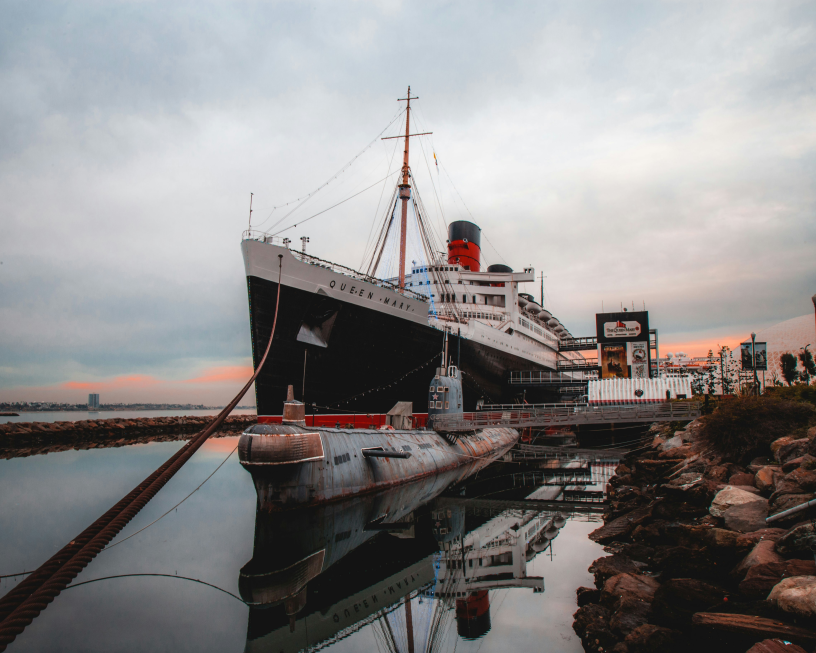 In 1999, my Boston friend (the same skeptic) and I ventured onto the Queen Mary in Long Beach, a colossal ship with a storied past. He was writing a ghost ship screenplay and hoped my paranormal sensitivity would spark inspiration. I knew little about the ship’s history at the time.
The staff back then avoided ghost talk, but a night-shift maintenance man shared stories. At the main Art Deco elevators, he’d often glimpse someone behind him—only to turn and find no one there. That set the tone.
Late one night, we accidentally took a service elevator down. The ship was silent. In a vast, balcony-encircled space once used by soldiers for leisure, I saw a soldier lean over the railing, then retreat as if he didn’t want to be seen. I told my friend, “They know we’re here.” I don’t know why I said that, I just blurted it out. That only seemed to give my friend fuel to run around looking for something.
He rushed into a closed-off restroom. Panic washed over me—I yelled for him to leave. “Why?” he asked, dismissing my fear. Then a loud metal bang echoed above, like a warning. We fled.
We wandered into the engine room—off-limits that late—where clanging noises surrounded us. Lost in the labyrinth of floors, I felt the rush of soldiers racing up a grand staircase, as if in a battle. Eventually, security found us and led us back to some elevators that brought us back up to the public areas of the ship.
In our cabin, we noticed an odd impression on a bed—like someone had sat there while we were away. No one should have been in our room while we were out exploring, and nothing else in the room was disturbed.
The Queen Mary has a haunting energy—grand memories and tragedies alike. I’d return in a heartbeat.