Listeners:
Top listeners:
-
 play_arrow
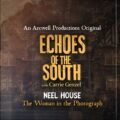
Neel House: The Woman in the Photograph Carrie Genzel
-
 play_arrow
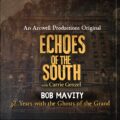
Bob Mavity: 32 Years with the Ghosts of the Grand Carrie Genzel
-
 play_arrow
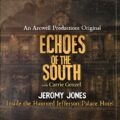
Jeromy Jones: Inside The Haunted Jefferson Palace Hotel Carrie Genzel
-
 play_arrow
Katelan Foisy: The Myths and Misconceptions of Tarot Carrie Genzel
-
 play_arrow
The Ones Who Hide Part Two: The Ones She Feared Carrie Genzel
-
 play_arrow
The Ones Who Hide Part One: The Girl in the Blue Dress Carrie Genzel
-
 play_arrow
Echoes That Follow Us Home Carrie Genzel

Seeking the Truth
One of the things Morrighan reminds us of before nearly every investigation is simple.
Don’t fill in the blanks.
It sounds obvious, but it may be one of the most important lessons I’ve learned through paranormal investigations.
Every historic location comes with a story long before we arrive. A homeowner shares experiences that have stayed with them for years. A tour guide repeats local legends. Newspaper articles tell one version of events. Neighbors pass along stories that have become part of the folklore surrounding a place.
By the time we walk through the front door, it would be easy to start connecting dots before we’ve even asked our first question.
But that’s exactly what we try not to do.
Prefer to listen? This Field Notes entry is available as an audio recording below.
Morrighan often reminds us not to force experiences to fit the narrative we’ve inherited. If a piece of equipment responds, we don’t immediately decide what caused it. If we receive communication, we don’t rush to label who we think we’re speaking with. We let each interaction build naturally, allowing the investigation itself to guide us rather than our expectations.
That approach requires patience.
It also requires humility.
Even when I know the history of a location, the claims that have been made, or the stories that have circulated for decades, I try to remind myself that those stories are only the starting point.
They are not the conclusion.
Sometimes the evidence supports what people have experienced.
Sometimes it points somewhere completely unexpected.
And sometimes it reminds us that we simply do not know yet.
As someone who loves researching history, I know how easy it is to become attached to a theory. You find one interesting connection, and suddenly every new discovery seems to support it. Historians have a name for that tendency: confirmation bias. We naturally notice the information that supports what we already believe while overlooking the details that challenge it.
Paranormal investigations are no different.
If we become too attached to proving a particular story, we risk missing the story that is actually unfolding in front of us.
That is why I believe the most important thing we bring into an investigation is not a camera, a recorder, or a piece of equipment.
It is an open mind.
Our responsibility is not to prove the lore.
It is not to debunk it either.
Our responsibility is to seek the truth, wherever it leads.
Sometimes that truth is stranger than the stories we inherited.
Sometimes it is quieter.
Sometimes it is more human.
And occasionally, it reminds us that the most compelling part of an investigation is not confirming what we expected to find.
It is discovering what we never expected at all.
As Echoes of the South continues exploring historic locations throughout Macon, Georgia and beyond, I hope we never lose sight of that principle.
Walk in with curiosity.
Listen carefully.
Let the location tell its own story.
And never be so attached to the answer that you stop seeking the truth.