Listeners:
Top listeners:
-
 play_arrow
Neel House: The Woman in the Photograph Carrie Genzel
-
 play_arrow
Bob Mavity: 32 Years with the Ghosts of the Grand Carrie Genzel
-
 play_arrow
Jeromy Jones: Inside The Haunted Jefferson Palace Hotel Carrie Genzel
-
 play_arrow
Katelan Foisy: The Myths and Misconceptions of Tarot Carrie Genzel
-
 play_arrow
The Ones Who Hide Part Two: The Ones She Feared Carrie Genzel
-
 play_arrow
The Ones Who Hide Part One: The Girl in the Blue Dress Carrie Genzel
-
 play_arrow
Echoes That Follow Us Home Carrie Genzel

Death Doesn’t Change Who You Were
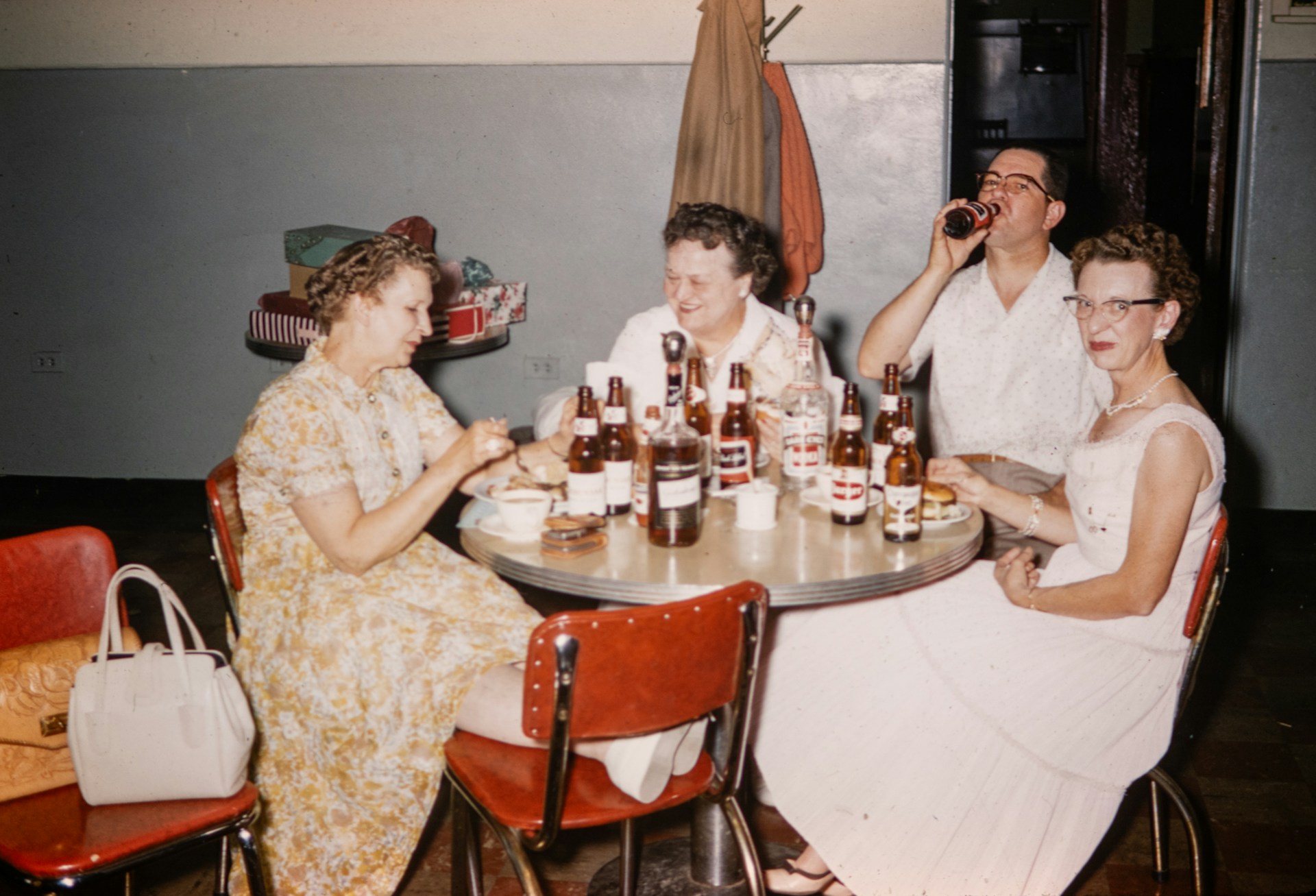
Lately, I’ve been thinking about personality.
More specifically, why we sometimes seem to forget that spirits have one.
We talk about “a spirit” being present in a home as though that tells us something about who they are.
It doesn’t.
They were people.
They had opinions.
They had preferences.
They had senses of humor.
They had bad days.
Some were probably incredibly kind.
Some were probably difficult.
Some loved company.
Some wanted everyone to leave them alone.
And I see no reason to believe that crossing over suddenly turns everyone into the same agreeable, all-knowing version of themselves.
If anything, our investigations have taught me the opposite.
We encounter personalities.
And once you start thinking about spirit communication that way, a lot of things begin to look different.
Prefer to listen? This Field Notes entry is available as an audio recording below.
They Don’t Have to Like Us
I sometimes laugh at the assumption that because we have arrived to investigate, everyone who may be present should want to communicate with us.
Imagine applying that logic to the living.
Three strangers arrive at your house carrying cameras, recorders, lights, and equipment you’ve never seen before.
They introduce themselves.
Then they start asking you questions.
What’s your name?
How old are you?
Why are you here?
Who else is here with you?
Can you come closer?
Can you touch this?
Can you make that light up?
I mean…
Maybe you’d answer.
Maybe you’d be fascinated.
Or maybe you’d wonder who invited these people and how quickly you could get them out of your house.
Why should we expect someone in spirit to react any differently?
Some of the people we encounter seem eager to communicate.
Others are cautious.
Some seem curious about us.
Some appear completely uninterested.
And every once in a while, someone seems mildly annoyed that we are there at all.
Fair enough.
Being dead doesn’t mean you suddenly have to become an extrovert.
Personality Is Evidence Too
One of the things I find most interesting during an investigation is when a personality begins to emerge.
Not simply a name or a date.
A person.
Someone jokes with us.
Someone seems protective.
Someone is reluctant to answer a particular question.
Someone repeatedly directs our attention toward the same person or place.
Someone responds to Morrighan differently than they respond to Jonathan or me.
Those interactions can tell us something that historical records rarely can.
Research may tell me where someone lived, who they married, what they did for a living, or when they died.
It doesn’t necessarily tell me what made them laugh.
Whether they were stubborn.
Whether they were shy.
Whether they liked being the center of attention.
Whether they trusted easily.
Those things rarely survive in a census record or property deed.
But personality is part of a life too.
And sometimes, during an investigation, we get a glimpse of it.
Death Isn’t a Personality Transplant
There is another assumption I find interesting.
We sometimes talk about the dead as though dying automatically makes someone wise.
Peaceful.
Forgiving.
Enlightened.
Maybe that happens for some.
I don’t know.
But I also don’t assume that death erases everything that made someone who they were.
If you were stubborn in life, perhaps some of that stubbornness remains.
If you were protective of your family, why wouldn’t that still matter to you?
If you were private, perhaps you still don’t want strangers asking personal questions.
If you had a wicked sense of humor, I certainly hope death doesn’t take that away.
And if you were complicated?
Well, most of us are.
That matters when we investigate because behavior without context is easy to misinterpret.
A spirit who refuses to communicate isn’t necessarily frightened.
Someone who repeatedly interferes with equipment isn’t necessarily hostile.
A strong presence isn’t automatically dangerous.
Maybe they’re curious.
Maybe they’re irritated.
Maybe they’re trying to communicate in the only way available to them.
Or maybe they simply don’t like us.
That is also an option.
We Bring Our Personalities Too
Of course, this works both ways.
We don’t walk into an investigation as blank slates either.
Jonathan is Jonathan.
Morrighan is Morrighan.
And I am very much me.
We each bring a different energy, personality, sense of humor, and way of communicating into a location.
And I think the spirits we encounter respond to that.
Sometimes someone seems more comfortable communicating with Morrighan.
Sometimes Jonathan gets a response none of us were expecting.
Sometimes I ask a question that shifts the conversation.
There are moments when humor seems to open things up.
Others when the entire tone of the room changes and we know it’s time to become very serious.
It is a relationship, however brief.
And relationships are shaped by personality.
That may be why no two investigations ever feel exactly the same.
You can bring the same team.
The same equipment.
The same intentions.
But you cannot recreate the people you are going to meet.
Meeting Someone Where They Are
Thinking about spirits as individuals also changes the way I approach helping them.
Not everyone needs the same thing.
Some may need information.
Some may need reassurance.
Some may need help understanding what has happened to them.
Some may simply want to be heard.
And some may not want anything from us at all.
I think there is respect in allowing for that.
Our presence does not create an obligation for someone to communicate.
Our curiosity does not entitle us to their story.
And our desire to help doesn’t mean we automatically know what help should look like.
Sometimes the best thing we can do is listen long enough to understand who we’re actually talking to.
Not the ghost.
Not the evidence.
The person.
Still Themselves
Maybe that is one of the reasons this work continues to fascinate me.
The history matters.
The evidence matters.
The unexplained moment that makes all three of us turn toward the same corner of a room certainly matters.
But what stays with me most often are the personalities.
The humor.
The hesitation.
The affection.
The stubbornness.
The protectiveness.
Those little flashes that make someone feel less like a name I uncovered during research and more like a person who once had an entire life I will never fully know.
Death may change our relationship to the physical world.
But I don’t believe it makes us interchangeable.
We spend a lifetime becoming ourselves.
I find it hard to believe that something as profound as personality simply disappears when that lifetime ends.
So when we investigate, I try to remember that we aren’t walking into a building looking for “spirits.”
We’re meeting people.
And just like the living, every one of them is going to be different.
Field Notes
Field Notes are personal reflections from my ongoing investigations, historical research, and conversations across the South. They are not meant to provide definitive answers, only honest observations gathered along the way.
Until next time…
Stay close.