Listeners:
Top listeners:
-
 play_arrow
Neel House: The Woman in the Photograph Carrie Genzel
-
 play_arrow
Bob Mavity: 32 Years with the Ghosts of the Grand Carrie Genzel
-
 play_arrow
Jeromy Jones: Inside The Haunted Jefferson Palace Hotel Carrie Genzel
-
 play_arrow
Katelan Foisy: The Myths and Misconceptions of Tarot Carrie Genzel
-
 play_arrow
The Ones Who Hide Part Two: The Ones She Feared Carrie Genzel
-
 play_arrow
The Ones Who Hide Part One: The Girl in the Blue Dress Carrie Genzel
-
 play_arrow
Echoes That Follow Us Home Carrie Genzel

The Stories That Come Back to Us
Lately, I’ve been thinking about what happens after we tell a story.
We investigate a location.
I research its history.
We document what we experience.
I spend hours reviewing footage, listening to audio, following names and details, and trying to understand how all the pieces fit together.
Eventually, we put an episode out into the world.
You would think that would be the end of the process.
Sometimes it’s just the beginning.
Every once in a while, someone watches an episode and recognizes something.
A name.
A family.
A place.
A detail from a story they grew up hearing.
They reach out and suddenly we have a piece of information we didn’t have before.
Maybe it confirms something we discovered during the investigation.
Maybe it adds context.
And sometimes, it changes the story entirely.
I absolutely love when that happens.
Because history has never belonged to one person.
And neither do the stories we’re trying to uncover.
Prefer to listen? This Field Notes entry is available as an audio recording below.
-
 play_arrow
The Stories That Come Back to Us Carrie Genzel
The Blank Spaces
The more historical research I do, the more aware I become of how much we simply don’t know.
History is full of blank spaces.
Records disappear.
Names are misspelled.
Photographs lose their identities.
Stories are passed from one person to another until no one remembers exactly where they began.
And sometimes, when facts are missing, storytelling fills the space.
One person tells a story.
Someone else adds a detail.
Years pass.
The story gets repeated often enough that eventually the retelling becomes accepted as history.
That doesn’t necessarily mean anyone intended to get it wrong.
It’s simply what stories do.
They change in the telling.
That is why I’m always interested in the difference between what we can document, what has been passed down, and what we experience during an investigation.
Sometimes those things line up beautifully.
Sometimes they don’t.
And when they don’t, that’s usually where I become even more curious.
Someone Out There Knows Something
One of the unexpected benefits of sharing these investigations publicly is that our audience becomes another doorway into the history.
I can search archives.
I can read newspapers.
I can trace property records and family histories.
But I cannot know what someone’s grandmother told them when they were ten years old.
I don’t know what photograph is sitting in someone’s attic.
I don’t know which family story has been passed down for generations but never written anywhere.
I don’t know who will hear a name in one of our episodes and suddenly realize they know exactly who we may be talking about.
Until they tell us.
And when that happens, the story gets bigger.
There is something thrilling about receiving a message that begins with some version of:
“I think I know who that was.”
Because now there is another thread to follow.
When New Information Changes the Story
Of course, new information doesn’t automatically mean accurate information.
That matters.
A family story is still a family story until we can find something to support it.
A memory can be imperfect.
A name can belong to more than one person.
And folklore can become deeply embedded in a place, particularly when the same story has been repeated for decades.
So when someone brings us new information, it doesn’t close the case.
It opens another door.
Now I have more questions.
Can I document it?
Does it connect with anything Morrighan received during the investigation?
Does it explain something we couldn’t understand at the time?
Does it contradict the story everyone has been telling?
And if it does, which story does the evidence support?
Sometimes one new detail sends me back into the research from an entirely different direction.
I love that.
Because I’m not interested in protecting the version of the story we started with.
I’m interested in getting closer to the truth.
Getting the Story Right
That has become increasingly important to me as we continue making Echoes of the South.
We are dealing with real people.
Even when those people are no longer living.
Their lives shouldn’t become whatever version makes the best ghost story.
If the historical record contradicts the legend, I want to know.
If someone comes forward with information that changes our understanding, I want to hear it.
If we discover that something we believed during an investigation was incomplete, I want to correct it.
There is no disappointment in that for me.
Quite the opposite.
The discovery is the exciting part.
Because every correction removes something that doesn’t belong and gives us a clearer view of the person underneath it.
And sometimes the spirits themselves seem to help us do that.
A name comes through.
A relationship.
A detail we don’t understand until later.
Something that sends me searching in a direction I never would have considered otherwise.
Other times, that missing piece comes from someone who is still here.
Either way, the story moves.
The Living Remember Too
I think we sometimes forget that history isn’t contained entirely in archives.
Some of it is still walking around.
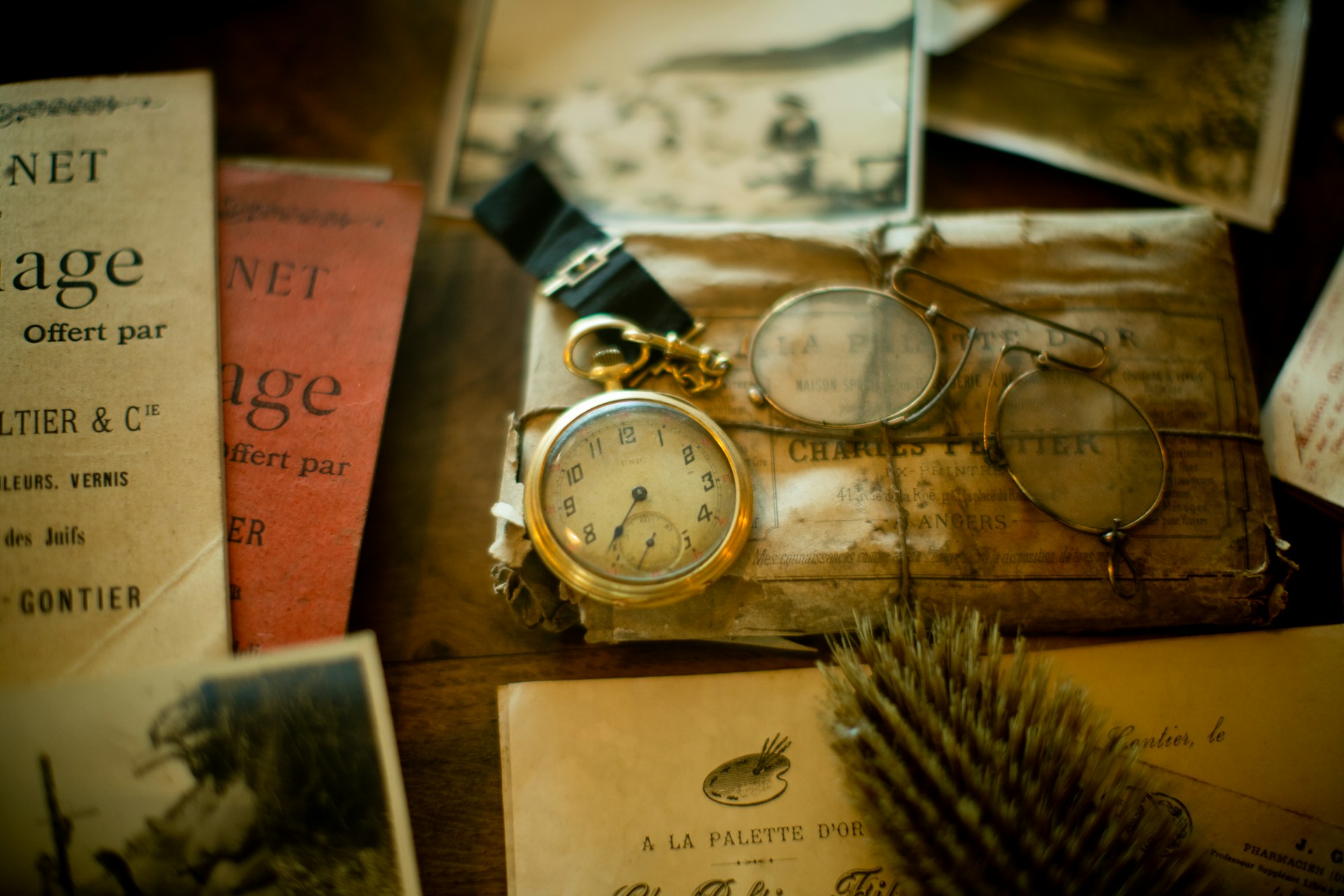
It lives in family photographs.
Letters.
Objects people kept without knowing whether anyone else would care about them.
Stories told around dinner tables.
Memories someone hasn’t thought about in thirty years until they hear a familiar name.
That kind of history can be fragile.
When the person carrying it is gone, sometimes the information disappears with them.
Which makes those moments when someone comes forward feel even more significant to me.
They aren’t simply giving us another interesting detail for an episode.
They may be preserving something that otherwise would have disappeared.
And occasionally, they may be giving a person in spirit back a piece of their identity that history lost.
The Story Keeps Moving
There is something wonderfully unpredictable about all of this.
We can investigate.
Research.
Review the evidence.
Edit the episode.
Publish it.
And still not have the whole story.
Maybe we never will.
But once we share what we’ve found, the story belongs to a much larger conversation.
Someone may recognize it.
Someone may question it.
Someone may remember something.
Someone may open a box that hasn’t been touched in decades and find the photograph we didn’t know existed.
And suddenly, we’re investigating again.
Not because we returned to the location.
Because the story came back to us.
I think that is one of the most exciting things about this work.
We aren’t trying to preserve a legend simply because it has been told for a long time.
We’re trying to listen closely enough to discover what actually happened.
Sometimes the dead help us do that.
Sometimes the living do.
And every once in a while, they meet somewhere in the middle and give us a piece of the story neither could have given us alone.
That’s when the history really starts to come alive.
Field Notes
Field Notes are personal reflections from my ongoing investigations, historical research, and conversations across the South. They are not meant to provide definitive answers, only honest observations gathered along the way.
Until next time…
Stay close.