Listeners:
Top listeners:
-
 play_arrow
Haralson, Georgia Part Two: The Darkness & The Imp Carrie Genzel
-
 play_arrow
Haralson, Georgia Part One: The Forgotten Dead Carrie Genzel
-
 play_arrow
Alex Temblador: The Ghost Stories Found Her Carrie Genzel
-
 play_arrow
Historic Griffin Hotel: Funhouse of Tricks Carrie Genzel
-
 play_arrow
Nest of Singing Birds: The House That Wasn't There Carrie Genzel
-
 play_arrow
Nest of Singing Birds: The House That Wasn't There Carrie Genzel
-
 play_arrow
Echoes That Follow Us Home Carrie Genzel

The Universe Is a Big Place
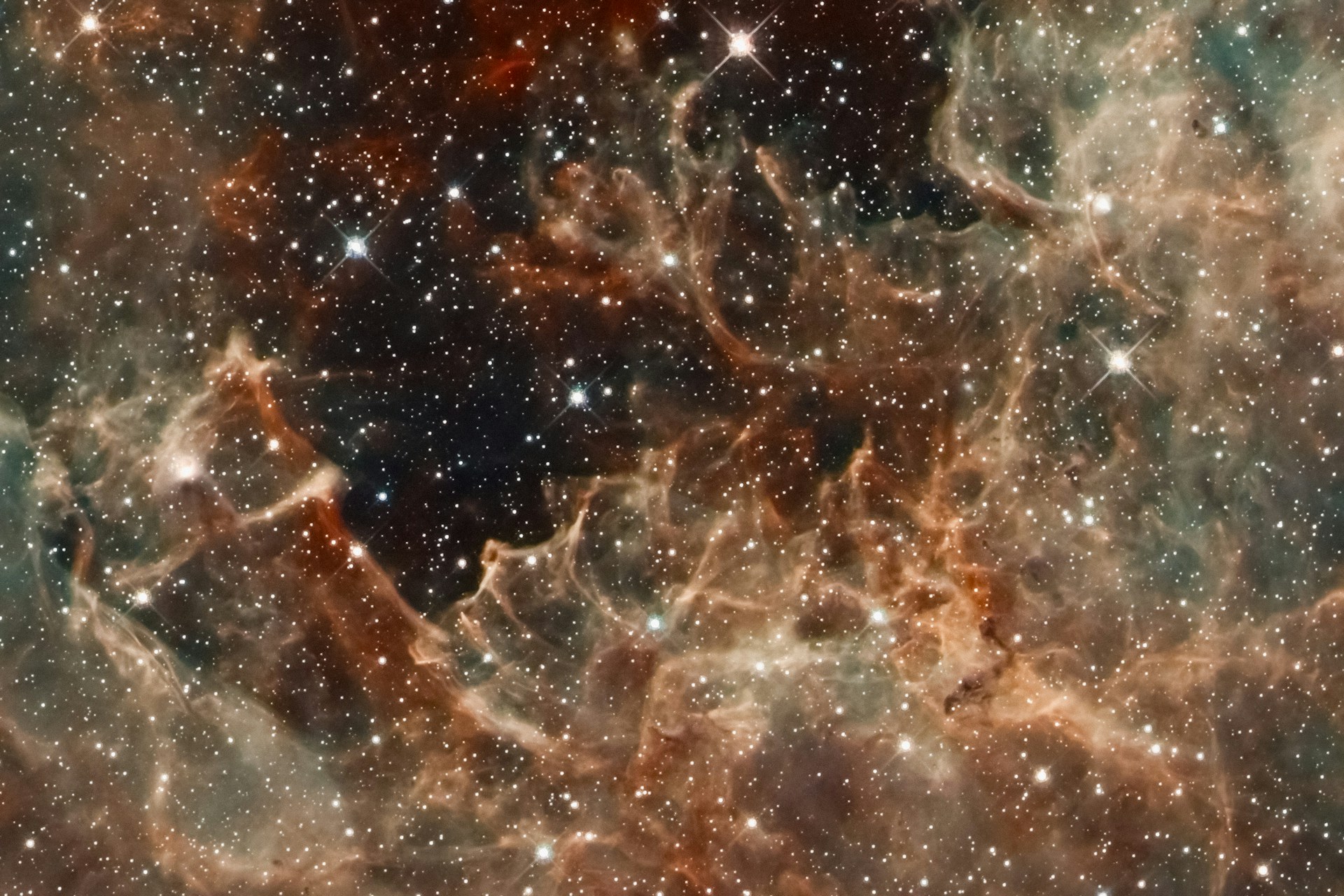
The more I investigate the unknown, the more I realize how much I don’t know.
And I find that incredibly exciting.
Before Echoes of the South, most of my paranormal experiences and interests centered around spirits. People who had died but remained connected to the living, to a location, or to something they had left unfinished.
I knew there were other possibilities, of course.
I’d heard stories about fairies, elementals, angels, demons, and all manner of beings that have appeared in folklore, religious traditions, and supernatural accounts for centuries.
But knowing those stories exist and having conversations about them during an actual investigation are two very different things.
Working with Morrighan and Jon has introduced me to an entirely different landscape of possibilities.
One that continues to challenge what I thought I knew.
Morrighan often reminds me that “the universe is a big place.”
And the longer we do this work, the more I appreciate just how much meaning there may be in those words.
Prefer to listen? This Field Notes entry is available as an audio recording below.
-
 play_arrow
The Universe Is a Big Place Carrie Genzel
Beyond the Familiar
When most people hear the word haunting, I imagine they think of a ghost.
Someone who lived.
Someone who died.
Someone who, for whatever reason, is still around.
It’s a familiar concept, even for people who don’t believe in the paranormal.
But what if the things we encounter aren’t always human spirits?
What if some have never been human at all?
During our investigations, we’ve had conversations about elementals, mimics, dark entities, spirit guides, and other types of beings that fall well outside the traditional ghost story.
Some of those conversations have sent me down research rabbit holes I never imagined exploring.
Others have introduced questions I hadn’t even thought to ask.
And what fascinates me is how quickly something that once sounded like the premise of a fantasy novel can become part of a serious conversation about what we’re experiencing in a location.
Not because we’ve suddenly figured everything out.
Quite the opposite.
Because every new possibility reminds me how limited my previous understanding may have been.
The Things We Were Taught
I think most of us grow up with a fairly narrow understanding of what might exist beyond what we can see.
Some of that comes from religion.
Some from family beliefs.
Some from the culture we grow up in.
And quite a bit comes from movies, television, and books.
We learn which things are supposed to be frightening.
Which are considered benevolent.
Which belong in fairy tales.
And which we’re told simply aren’t real.
But those categories don’t always hold up when you begin exploring the experiences people have reported across different cultures and throughout history.
Take fairies, for example.
For many of us, the word immediately brings to mind tiny, winged creatures from children’s stories.
Yet the beings described in older folklore are often considerably more complex, and not necessarily the gentle characters we’ve come to recognize.
Elementals have their own histories in mystical and esoteric traditions.
Accounts of angels and spiritual guides appear across religious and cultural beliefs.
And stories of beings that imitate familiar voices or appearances have been told in different forms for generations.
I find myself wondering how much of what we dismiss as fantasy comes from the way those stories have been retold, rather than from understanding where they originated.
That doesn’t mean every legend describes something that literally exists.
But I do think the stories are worth exploring.
Especially when something we encounter raises questions that familiar explanations don’t address.
A Different Kind of Education
One of the things I love about working with Morrighan and Jon is that I’m constantly learning.
Sometimes that happens during an investigation.
Sometimes it happens afterward, when we’re discussing an experience and Morrighan introduces a possibility I hadn’t considered.
And sometimes it happens when I find myself at my computer, researching a subject I knew almost nothing about the day before.
There have been moments when I’ve stopped a conversation simply to ask,
“Wait. What exactly is that?”
And I genuinely love those moments.
Because I’m curious.
I want to understand what we’re encountering.
I want to know where these ideas originated, how different traditions describe them, and whether there are similarities between those accounts and our own experiences.
I also want to understand the distinctions.
Not every unfamiliar presence is dangerous.
Not every unusual experience involves a human spirit.
And not every being described as dark in folklore necessarily fits the same description in another tradition.
There is a great deal of nuance in these subjects, and I think that matters.
Especially when we’re trying to communicate responsibly about experiences that people may already find frightening.
Knowledge Changes the Conversation
Morrighan has another saying I hear often.
“Knowledge is power.”
I think about that quite a bit.
Because when we encounter something unfamiliar, it’s easy to respond from whatever understanding we already have.
And if that understanding is limited, fear can fill in the blanks.
We may assume something is threatening simply because we don’t recognize it.
Or we may fail to appreciate the seriousness of an encounter because we don’t understand what we’re dealing with.
Neither is particularly helpful.
For me, learning creates more room for discernment.
It gives me better questions to ask.
It helps me understand why Morrighan or Jon may approach a situation differently from what I expected.
And it reminds me that curiosity and caution can exist together.
I don’t have to understand everything to be willing to learn about it.
Nor do I have to accept every explanation without asking questions.
That balance is important to me.
Because education has always been part of what I want Echoes of the South to offer.
And quite often, that education begins with me.
Keeping an Open Mind
There’s something interesting about realizing that the boundaries of your understanding have shifted.
Things I once associated almost exclusively with science fiction, mythology, or fairy tales have become subjects of regular conversation.
Not because the mystery has disappeared.
But because I’m becoming more comfortable exploring possibilities I hadn’t previously considered.
I think that willingness to expand our understanding is valuable well beyond paranormal investigation.
We all carry ideas about how the world works.
Some come from personal experience.
Others were handed to us long before we were old enough to question them.
And sometimes we become so comfortable with those ideas that we stop considering what might exist beyond them.
I don’t want to do that.
I want to remain curious enough to ask questions that may sound strange.
To explore traditions I didn’t grow up with.
To listen when someone describes an experience that doesn’t fit neatly into what I already know.
And to recognize that being unfamiliar with something doesn’t automatically make it impossible.
A Much Bigger Universe
I have no idea what we’ll encounter during our next investigation.
It may be a human spirit with a story to share.
It may be something that challenges everything I thought I understood about a particular location.
Or it may introduce me to an entirely new subject that sends me searching for books, historical accounts, and conversations with people who know far more about it than I do.
Whatever it is, I hope I never lose the excitement of learning something new.
Because one of the greatest gifts this work has given me is a growing appreciation for how much remains outside my understanding.
The world feels bigger to me now.
More layered.
More complicated.
And infinitely more interesting.
I don’t expect to find answers to every question.
In fact, I suspect the more we learn, the more questions we’ll discover.
I’m perfectly happy with that.
There are worse things than realizing you don’t know nearly as much as you thought you did.
Especially when the alternative is believing there’s nothing left to discover.
As Morrighan says, the universe is a big place.
And I’m only beginning to appreciate just how big.
Field Notes
Field Notes are personal reflections from my ongoing investigations, historical research, and conversations across the South. They are not meant to provide definitive answers, only honest observations gathered along the way.
Until next time…
Stay close.